Why does exercise equipment outlast the resolution?
Gym equipment is the heaviest thing people buy on impulse. A treadmill is a motor, a steel frame and a long belt in one piece, and an elliptical is longer than most stairwells are wide. Both usually go down to the basement in a box and stay there, so getting them back up is a project nobody planned for.
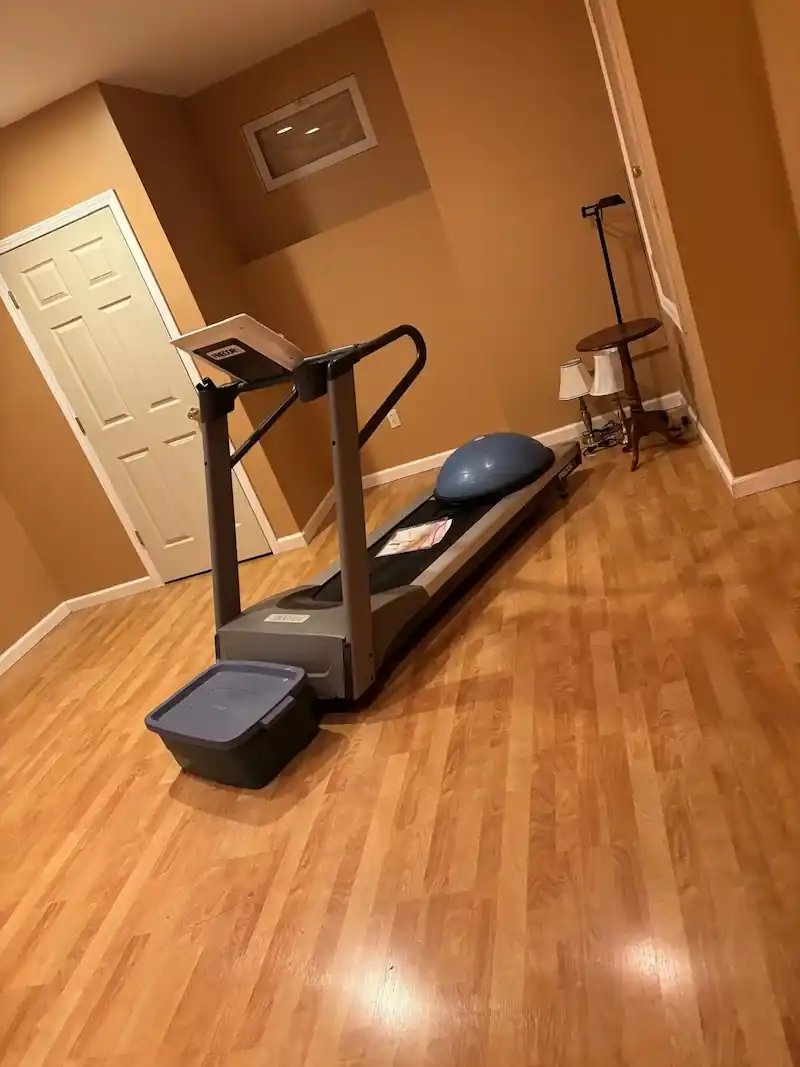
Weight sets are the other half. Plates, dumbbells and a loaded rack add up fast, and a bench with a bar still on it can hide a few hundred pounds. A Ridgewood basement with a treadmill standing in the middle of the floor is the usual picture, and it is usually one narrow staircase from freedom.
How does the crew move a machine that size?
Send a photo of the equipment and the stairs it has to climb, or list the pieces. The estimate comes from that, and the final price is confirmed on site. Machines get folded, unbolted or taken apart where that is the safer way to carry them, and plates are unloaded from bars before anything is lifted.
The crew does all of the lifting, loading and hauling, and sweeps up the floor where the equipment stood. You don't need to be home once access and scope are confirmed. Since the work is done by in-house New Jersey crews and not subcontractors, the person on your stairs is trained for exactly this kind of carry.
What does gym equipment removal cost?
One or two machines fall under the single item pickup price of $185 to $250. Extra-heavy items, generally over 150 lb, can raise that, and a full-size treadmill or a loaded rack can easily cross that line. Labor, loading, hauling, disposal fees and sweep-up are included, and there is no hourly rate.
A whole home gym, with a machine, a rack, a bench and a set of plates, is better priced by volume on the 25 cubic yard truck, starting at $350 for a 1/16 load. Usable equipment is donated whenever possible and the rest is recycled. Leave no fuel, gasoline, propane tanks or chemicals in the room; the crew will not take them.